A platform that rethinks the built environment.
ZIRKULAR-X connects artificial intelligence, semantic data models and circular economy to turn analogue existing buildings into data-driven material resources.
Why ZIRKULAR-X?
The building sector holds an enormous untapped capital, yet over 90% of the relevant data is analogue, fragmented or missing entirely. This makes circular construction the exception rather than the rule.
ZIRKULAR-X digitises and structures this information automatically. This makes materials, components and their CO₂ potential finally plannable, for architects, engineers and project developers alike, so resources are taken seriously.
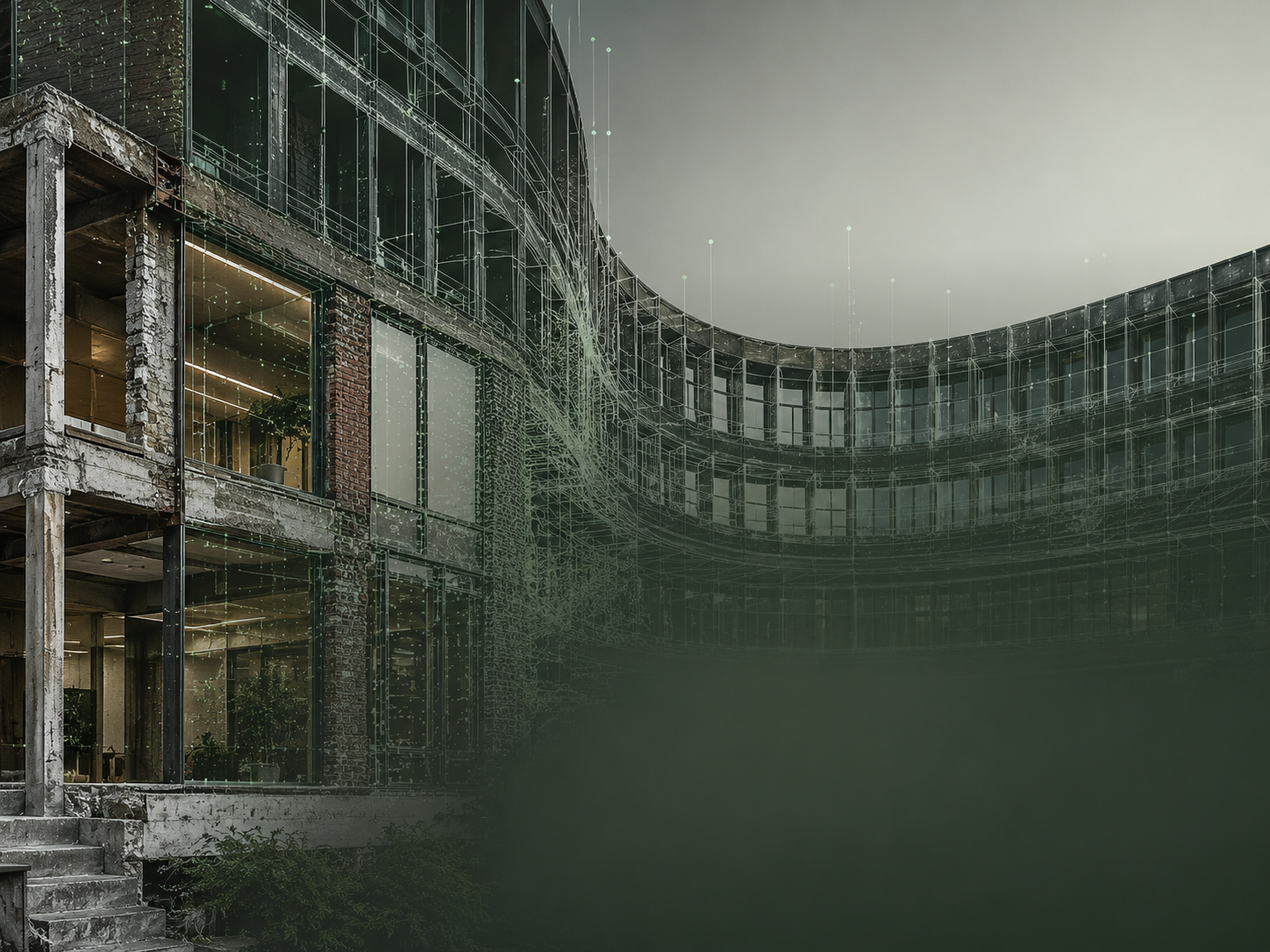
Three technologies. One continuous platform.
ZIRKULAR-X integrates three key technologies into one coherent solution for the circular economy in construction for the first time.
Standardise material data
For every component in an existing building, a Digital Product Passport (DPP) is created, including material composition, pollutants, dismantlability and life cycle data. Standardised, interoperable, EU-compliant under ESPR and CPR.
Automatically read analogue sources
Computer vision models (CNNs, ResNet, EfficientNet) analyse building plans and photos. NLP algorithms (BERT derivatives) extract technical documents and tender texts. Goal: F1 score > 0.85 for building component classification.
Intelligently linking data silos
A graph database system (Neo4j) links BIM models, facility management data and secondary raw material marketplaces via ontologies, so that data is not merely stored but understood.
The heart of the matter
the platform
The circularity index translates the circular properties of a product into a quantifiable score. It identifies potential for reuse and further use as well as recycling, and creates transparency about optimal end-of-life pathways.
Project progress
Measurable impact for the economy and climate.
ZIRKULAR-X creates concrete, quantifiable benefits for users, the construction industry and resource policy.
Builders and operators:
Clear data foundations for deconstruction and renovation planning. Compliance with EU requirements. Direct integration into existing BIM and FM systems.
Recycling companies and traders:
Access to structured material information, connection to secondary raw material marketplaces.
IT integrators and start-ups:
SDK packages and open REST APIs enable easy integration of evaluation logic into your own products, without your own research.
Public sector:
Valid CO₂ balances and open data models support funding bodies, as well as the master plan for BIM and the national circular economy strategy.
Funded by the BMFTR
ZIRKULAR-X is funded within the GreenTech Innovation Competition, "Digital technologies as a lever for the circular economy", by the Federal Ministry of Research, Technology and Space (BMFTR).
Project duration: 2026–2029
Circular economy begins with knowledge.
Project updates, publications, and invitations to workshops directly to your inbox.